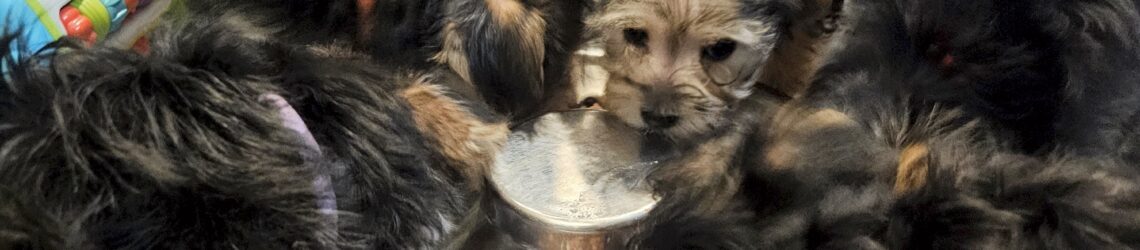


When a family adopts one of our puppies, we immediately send out “breed and care” information, which includes the puppy food we use, how much to feed, etc. We also send our puppies home with a starter pack of food. Many families tell us, “we want to keep feeding the puppy the same thing you do” (which is great, but not 100% necessary). Let me explain….
When we select the food for our dogs, we base it on several factors, some of which will not be relevant to your new puppy. Our adult breeding dogs have nutritional requirements and nutritional restrictions based on the fact that they are breeding. We also factor in that our dogs do best with chicken (beef, pork, lamb etc. makes them puke & poop for some reason). And our Maltese get tear stains when they eat wheat. So, we look for an adult food that has no wheat, no peas, no potatoes (not even sweet potatoes), no legumes, chicken as the first ingredient, the right protein-to-fat ratio, and lots of other considerations. Once we find the right adult small breed dog food, we have to be sure there is also a puppy formula, because the mama dog needs to be able to eat puppy food during pregnancy and lactation in order to get enough kcals, protein, fat, etc. Thus, your puppy starts out on the puppy formula that matches our adult formula.
We send home a starter pack of food so your puppy will definitely have the food they are used to. BUT! You can also transition them to the food of your choosing by mixing our food with a little of your food every day until they are used to the new food.
When searching for the best puppy food, look for foods that have meat as the first ingredient. You don’t want to give your puppy a lot of meat “meal”, corn, soybeans, wheat, or tons of preservatives. Look for high protein (at least 25-30%) and high fat (at least 15-20%). If you can get fruits and vegetables in there, a good rule of thumb for a dog’s diet is 80% meat and 20% veg. You definitely want hard kibble, which is good for their teeth and jaws, but mixing in some wet food doesn’t hurt anything! I say ALL DOGS LOVE “FRESH PET”.
Two things I want to caution against. The first is the grain-free diet fad. Do some research on the detrimental health impacts grain-free diets have had on dogs. Many people go grain-free because their dog has “food allergies”, but I encourage you to not take any allergy diagnosis at face value. It’s very easy to blame something on an allergy, but the truth is – food allergies are a lot less common than you may think. In order to identify a food allergy, it takes time and dedication, using an elimination trial, feeding a hypoallergenic diet for 8-12 weeks, then reintroducing other food slowly and monitoring the effects.
The other – and I don’t want to upset anyone – is feeding your dog home-cooked food only. While I KNOW people do this with the very best intentions, it can be dangerous for your dog. The only exception (in my opinion) is if you are working closely with a board-certified veterinary nutritionist.
Nutritional requirements for dogs are V-E-R-Y different than those for humans. It is a complicated balance to ensure that dogs get the proper ratio of carbs, protein, fat, fiber, vitamins A/E/D/K, thiamin, riboflavin, niacin, folic acid, biotin, calcium, phosphorous, potassium, sodium, magnesium, iron, copper, zinc, manganese, selenium, etc. Preparing and feeding homemade food ONLY, without creating the proper ratios of all of these elements can lead to deficiencies which can cause stunted growth, heart/liver/kidney damage, nervous system damage, eye problems, skin problems, hair loss, bone deficiency, the list goes on. I’m just saying – if you only feed your dog home-cooked food from scratch, be very careful and make very sure you are doing it the right way.
With all of this being said – don’t be afraid to switch your puppy to another puppy food! It’s perfectly acceptable. And… don’t forget to switch them to adult food around 1 year of age. (Nutritional needs change as they get older.)
Hope this helps!